Texas Blues • Fender Stratocaster • Fire on Six Strings
A guitarist from Oak Cliff, Texas, who took blues that had been left for dead, ran it through a fury of tone and touch nobody had heard before, and became the man who saved the electric blues for a new generation, before his life was cut brutally short.
The Short Version
Who Was He?
Stevie Ray Vaughan (1954–1990) was a guitarist and singer from Dallas, Texas, who fronted the trio Double Trouble with bassist Tommy Shannon and drummer Chris Layton (later joined by keyboardist Reese Wynans). In a scene where blues had gone commercially cold, he made it loud, physical, and impossible to ignore again.
Two things make him singular. First, the tone and touch: a battered Stratocaster strung with massive-gauge strings, tuned down a half step, hit with a thumb-heavy, string-bending attack that fused Albert King's bends, Jimi Hendrix's fire, and Lonnie Mack's Texas twang into something entirely his own. Second, the ferocity of the playing, whole songs built on tension and release, distortion and dynamics, played like every note might be his last.
He died on August 27, 1990, in a helicopter crash after a show in East Troy, Wisconsin, at the height of his powers, sober, and just beginning to make peace with the demons that nearly killed him years earlier. He was 35. Three decades later, he remains the standard every blues-rock guitarist gets measured against.
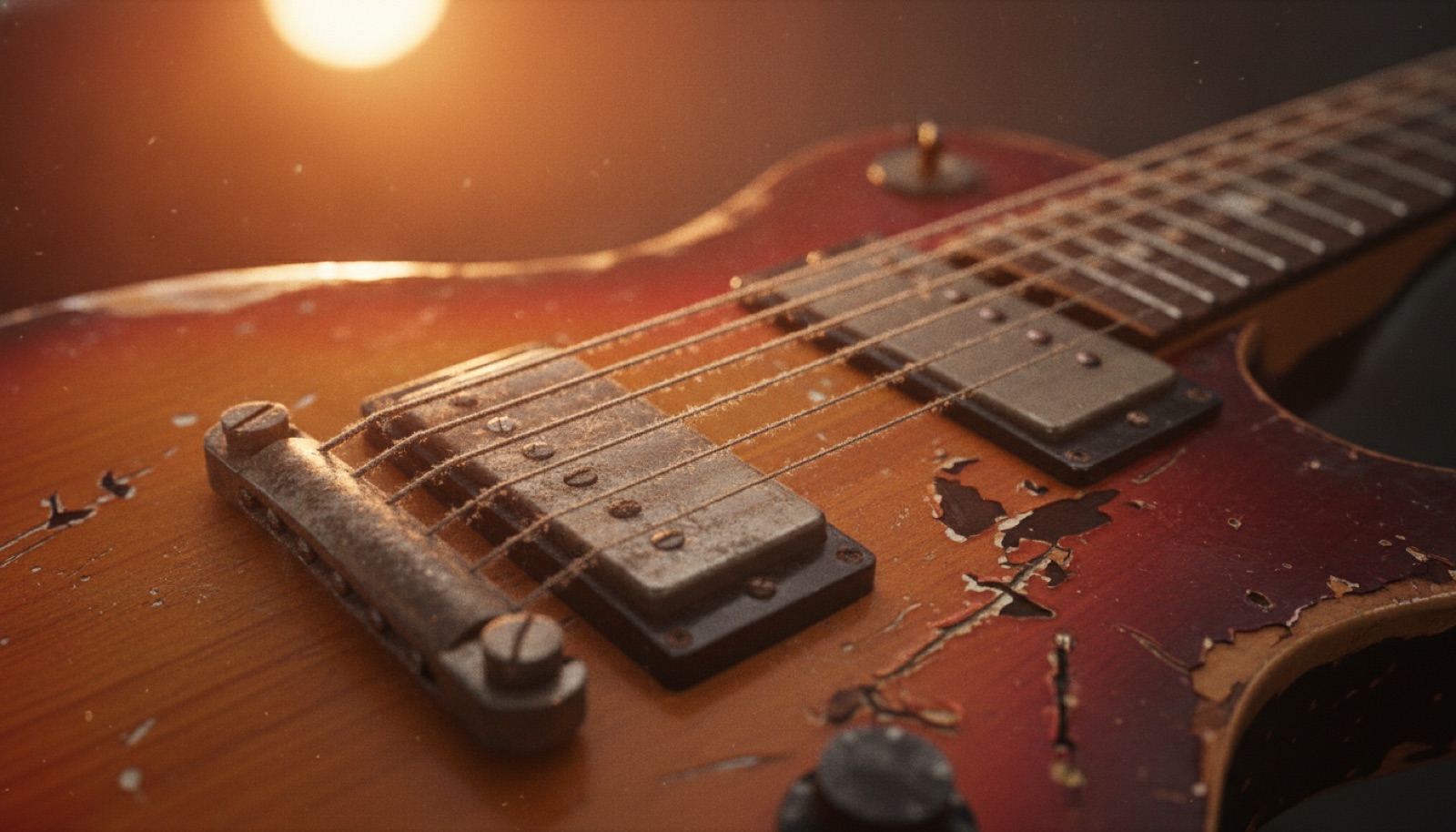
"Number One," the battered Strat that became an extension of his hands.From Oak Cliff to the World, and Back Too Soon
The Story
His career was short, roughly a decade in the national spotlight, but it moved from obscurity to reverence and through real darkness before an end nobody saw coming.
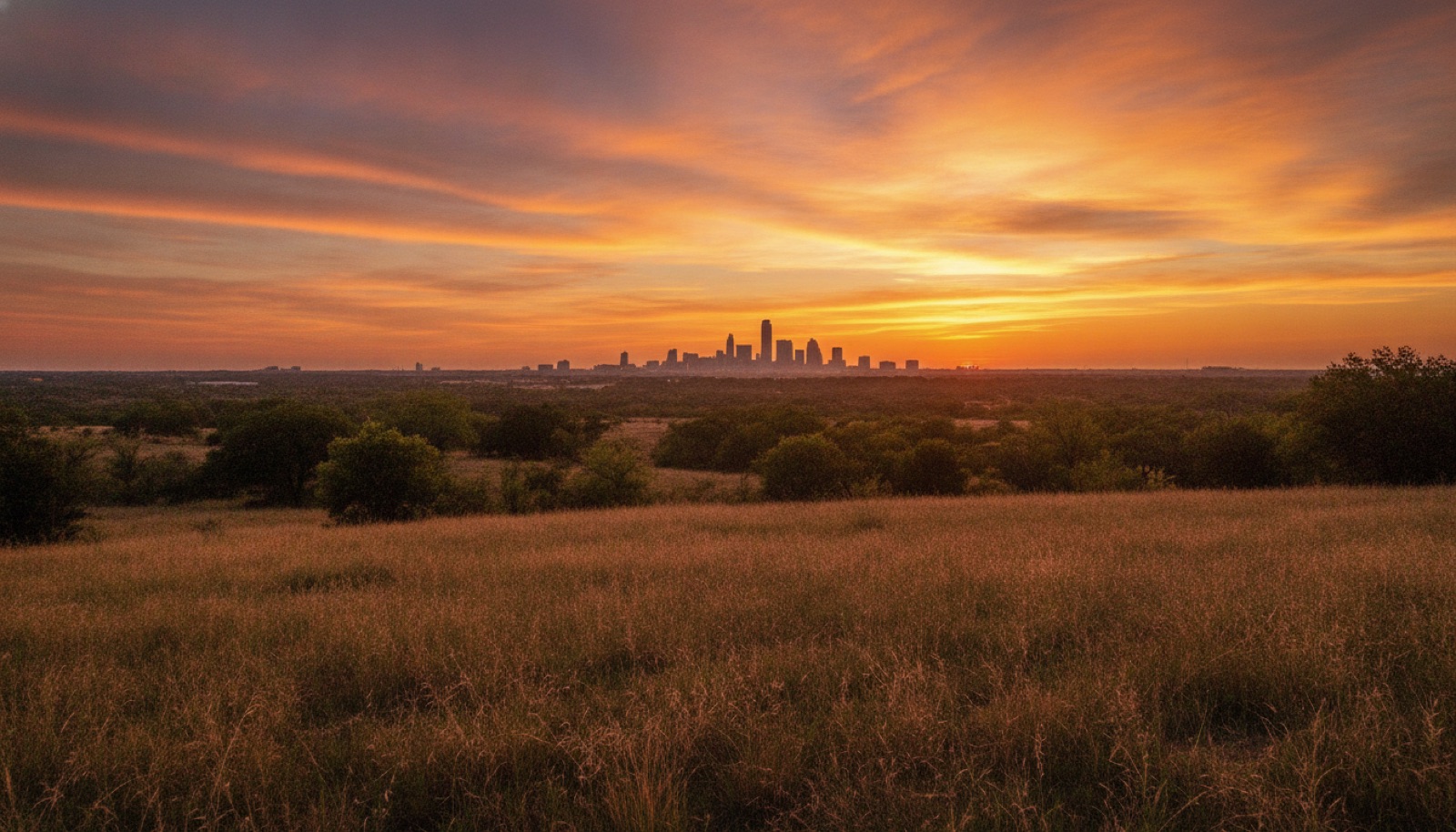
The Texas Flood: the wide, weathered landscape that named his debut.
1954–1970
A little brother chasing a big one
Born in Dallas in 1954, Stevie Ray Vaughan grew up idolizing his older brother Jimmie's guitar playing. He picked up guitar himself as a kid and, by his teens, was already playing Oak Cliff and Dallas clubs, chasing the same blues records Jimmie loved.
1971–1975
Austin, and a string of bands
He dropped out of high school and moved to Austin, working through bands like the Nightcrawlers, Krackerjack, and the Cobras, building a local reputation as the best guitarist in a city full of them.
1978
Double Trouble forms
Vaughan formed Double Trouble with drummer Chris Layton and, soon after, bassist Tommy Shannon, a veteran of Johnny Winter's band. The trio built a punishing local schedule and a ferocious live reputation around Austin.
1982
Montreux, and a phone call from Bowie
Booked into the Montreux Jazz Festival, unsigned and virtually unknown outside Texas, the trio's set split the audience but caught the ears of two people in the crowd: David Bowie and Jackson Browne. Bowie asked Vaughan to play on his next album; Browne offered free studio time.
1983
Texas Flood and Let's Dance
Vaughan's guitar defined David Bowie's "Let's Dance," released that spring. Weeks later, Texas Flood, recorded in two days at Browne's studio, introduced Double Trouble to the world and put electric blues back on the radio for the first time in years.
1984–1985
Couldn't Stand the Weather and Soul to Soul
Success came fast, and so did the touring grind. Couldn't Stand the Weather (1984) went further into Hendrix territory, and Soul to Soul (1985) added keyboardist Reese Wynans, but years of hard drinking and cocaine use were catching up with him.
1986
Collapse, and a hard reckoning
Vaughan collapsed on tour in Germany and, facing a health crisis brought on by years of addiction, checked into rehab. He got sober that year and stayed that way for the rest of his life, a fact he later credited to saving both his life and his music.
1989
In Step
His first fully sober album, and by many accounts his best: sharper, more controlled, and just as intense. It won a Grammy and included "Crossfire," his only number one on the Mainstream Rock chart.
August 27, 1990
East Troy, Wisconsin
After an all-star encore jam with Eric Clapton, Buddy Guy, and his brother Jimmie at Alpine Valley Music Theatre, Vaughan boarded a helicopter in thick fog for the short flight back to Chicago. It crashed into a nearby hill minutes after takeoff, killing him and four others instantly. He was 35, sober, and by every account playing better than ever.
1991–present
The Sky Is Crying, and a legacy that only grew
The posthumous The Sky Is Crying (1991), assembled from unreleased studio sessions, became a hit in its own right. He was inducted into the Rock and Roll Hall of Fame in 2015, and remains the reference point for every guitarist who picks up the electric blues.
Three Videos, One Education
Start Here
Stevie Ray Vaughan is best understood live, where the tone, the touch, and the sheer physical force of his playing all show up at once. These three performances are the fastest way in.
01 · The One You Know
"Pride and Joy" — live at Montreux, 1982
The song that introduced him to the world, played at the festival where an unsigned Texas trio caught David Bowie's and Jackson Browne's attention. Shuffle groove, effortless swagger, and the tone that would define the next decade of blues-rock.
02 · The Slow Burn
"Texas Flood" — live at the El Mocambo, 1983
A slow blues stretched out and wrung dry, filmed at a small Toronto club during the Texas Flood tour. This is the performance that shows why players who'd seen a thousand blues shows still called him the best they'd ever witnessed.
03 · The Groove
"Cold Shot"
A tighter, funkier side of the band, from Couldn't Stand the Weather. Proof that Double Trouble could lock into a pocket as hard as they could tear one apart.
The Studio Catalog
The Albums 5 to start with
Five records with Double Trouble, made in under a decade, one of them finished after his death. The copper-topped cards are the essential entry points; the blue marks the posthumous release.
1983
Texas Flood
The debut, recorded in two days. Raw, direct, and instantly a statement: "Pride and Joy," "Texas Flood," "Love Struck Baby." The obvious place to start.
Bigger, bolder, and more openly Hendrix-indebted, including a cover of "Voodoo Child (Slight Return)." The title track and "Cold Shot" became live staples.
Keyboardist Reese Wynans joins, widening the sound even as the drinking and drug use behind the scenes were reaching a breaking point. Home to "Change It" and "Say What!"
The first album made fully sober, and widely considered his finest: sharper writing, tighter playing, and a Grammy win. "Crossfire," "Tightrope," "Wall of Denial."
Assembled after his death from unreleased studio sessions spanning his whole career. Not a leftovers record, it's a genuine, moving addition to the catalog and a hit in its own right.
One curated YouTube Music playlist: the essentials across all five albums, studio and posthumous, in the order that best tells the story. Hit the button to play it.
Vaughan is remembered as a solo phenomenon, but he never played alone. Double Trouble was the rhythm section that gave him the room and the push to do what he did.
Thunderous tone and total physical commitment, every night.
Stevie Ray VaughanGuitar / VocalsFrontman and songwriter; played a battered 1963-body Fender Stratocaster nicknamed "Number One" (also called "First Wife"), strung with massive-gauge strings and tuned down a half step (d. 1990)
Tommy ShannonBassA veteran of Johnny Winter's band before joining Double Trouble; the low end that anchored the trio's biggest, loudest moments
Chris LaytonDrumsCo-founded Double Trouble with Vaughan in 1978 and stayed for the whole ride, driving the band's ferocious live shuffle
Reese WynansKeyboardsJoined for Soul to Soul in 1985, widening the sound with organ and piano for the band's later, sober-era records
The Tone
Vaughan's sound came from brute physical commitment as much as gear: strings so heavy most guitarists couldn't bend them, tuned down to ease the strain on his hands and give the notes extra weight, hit with a thumbpick and bare fingers instead of a pick. It's part of why so few players have ever truly sounded like him.
The Roots of the Sound
Influences
Vaughan built his style by fusing the electric blues greats he studied obsessively as a teenager with the psychedelic fire of the era's rock guitarists. Here is where it started.
Psychedelic Fire
Jimi Hendrix
The volume, the distortion, and the showmanship Vaughan chased his whole career; he covered "Voodoo Child" and "Little Wing" regularly.
The touch, the vibrato, and the storytelling instinct behind every solo; this live album was a formative listen for an entire generation of blues guitarists.
Vaughan was thoughtful and disarmingly humble in interviews, especially in the sober years, when he spoke openly about the addiction he'd nearly died from.
Interview · Lone Star Cafe, 1985
Stevie Ray Vaughan, Full Interview
A full, relaxed sit-down from the height of his rise, talking about his playing, his heroes, and the road that got him there, still years before he'd get sober.
A Toronto television interview from 1987, not long before the health crisis that pushed him into rehab, with Vaughan candid about the pressures of touring nonstop.
A short career leaves a deep archive: live albums, jam sessions, and a brother's story that runs alongside his own.
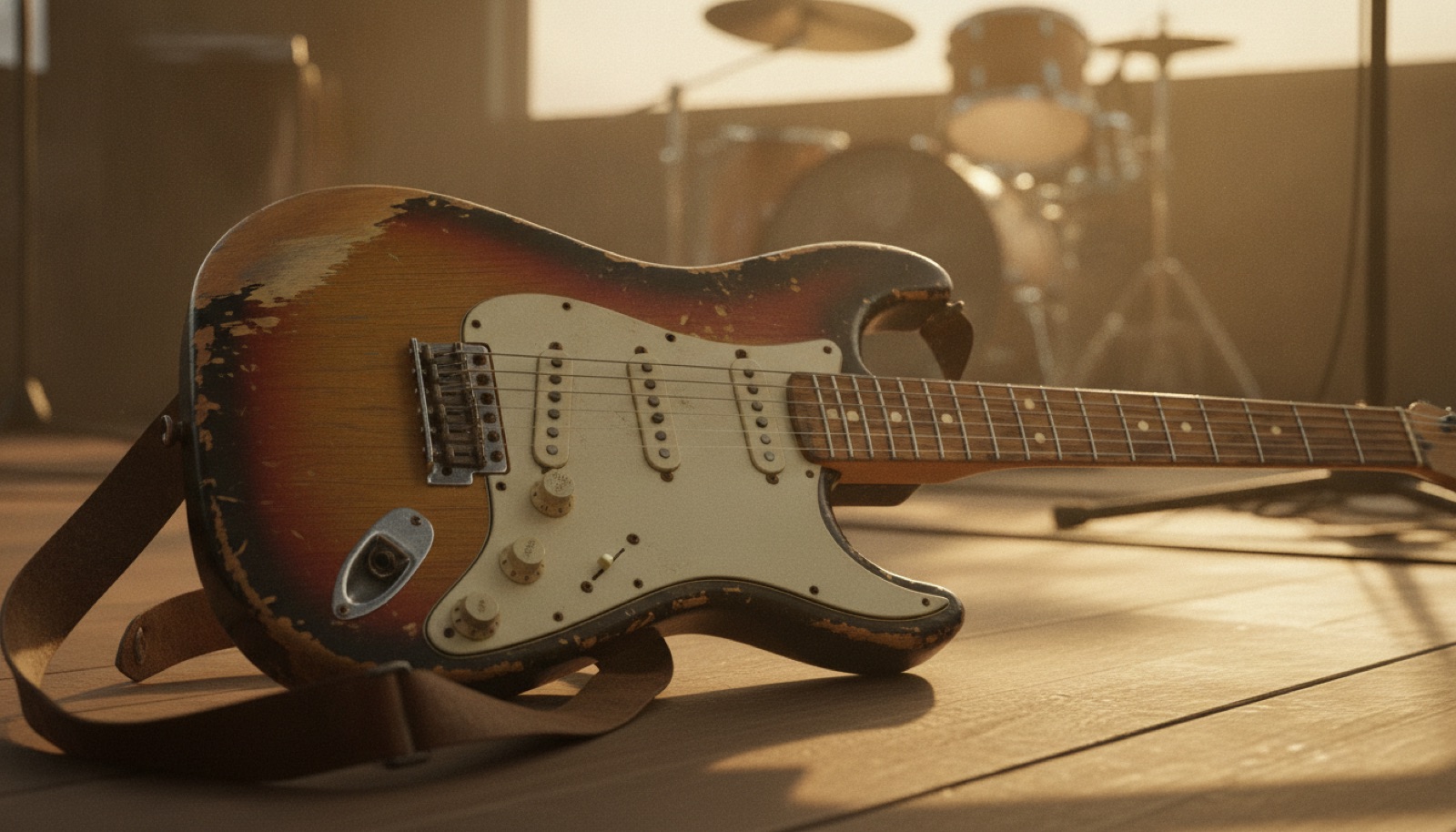
The instrument left behind, the fire it made never quite matched since.
In Session — the 1983 televised jam with Albert King, later released as a live album, is the clearest document of the mentor-student relationship that shaped Vaughan's playing.
Live Alive (1986) — the only live album released in his lifetime, capturing the band at full volume before the crash of that same year.
Family Style (1990) — Stevie Ray's only studio album with his brother Jimmie Vaughan, released weeks after Stevie Ray's death and a moving final statement between them.
The Jimmie Vaughan story — Stevie Ray's older brother, a celebrated guitarist in his own right with the Fabulous Thunderbirds, was the first person to put a guitar in his hands and remains the keeper of his legacy.
The Way to Listen
Start with Texas Flood front to back, loud, then go find any full live set you can. Vaughan's records are excellent, but the live tapes are where the legend actually lives.